Popular Conditions & Diets

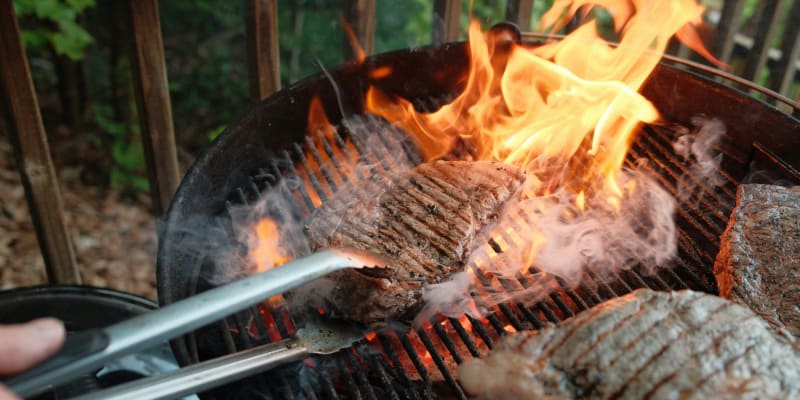
Grilling meat is a popular cooking method for good reasons: it brings people together, humans have been doing it since time immemorial, and it’s absolutely delicious. However, the high temperatures involved in cooking over an open flame can create potentially harmful compounds in meat, raising concerns about whether or not grilling is a healthy way to cook.
Compounds like heterocyclic amines (HCAs) form when amino acids, sugars, and naturally occurring compounds in muscle meat react to intense heat. Polycyclic aromatic hydrocarbons (PAH) develop when fat and juices drip onto an open flame, creating smoke that coats the meat. Both have been shown to damage DNA in laboratory studies and cause cancer in animals exposed to extremely high doses.
In real life, outside a lab setting, the amount of these chemicals produced depends entirely on how the meat is cooked. Higher temperatures, direct flames, longer cooking times, and heavy, black charring all increase HCA and PAH formation. And this all holds true only for meat: vegetables do not produce HCAs because they lack the muscle proteins found in meat.
Although the biology is plausible, translating these data to humans has been challenging. Animal studies typically use doses of HCAs and PAHs thousands of times higher than those consumed in a typical diet, and estimating long-term exposure is difficult.
Some observational studies have found that people who frequently eat well-done, grilled, or barbecued meat have a higher risk of colorectal, pancreatic, and prostate cancers. However, other studies have found little or no association, so grilled meat itself cannot be blamed with certainty.
One finding is much more consistent: diets rich in processed meat and large amounts of red meat are associated with an increased risk of colorectal cancer, regardless of whether the meat is grilled, fried, or prepared another way. Grilling may increase this risk by increasing exposure to HCAs and PAHs, particularly when meat is heavily charred.
Overall, experts agree that grilled meat poses a potential cancer risk, with the greatest concern for frequent consumption of heavily charred red and cured meats.
Fortunately, you don't have to give up barbecues altogether. A few simple changes can reduce the formation of HCAs and PAHs:
Grilling doesn't need to be off the menu. The evidence doesn't show that the occasional barbecue is likely to meaningfully increase cancer risk. However, frequently eating heavily charred meat- especially processed or large amounts of red meat- probably isn't the healthiest habit. A few simple cooking techniques can reduce exposure to potentially harmful compounds while still letting you enjoy grilled foods.
Lead photo by Joshua Kantarges on Unsplash.
Share this article