Popular Conditions & Diets

When following a low-histamine diet, it can be confusing to choose a drink, since coffee is a matter of debate, tea lists differ, kombucha is a fermented drink, and fruit juice may raise questions depending on the fruit and how it has been processed and stored. On the positive side, apart from water, there is still a good deal to enjoy.
One reason for the problem is that there is no single widely accepted low-histamine food list, and histamine levels can vary with freshness, fermentation, processing, and storage. That is why this guide has adopted a conservative strategy: when recommendations conflict, we have usually left out the doubtful ones. The outcome is the safest and most comprehensive list of low-histamine drinks available.
Water is the simplest drink, low in histamine, and a straightforward way to stay hydrated. The available choices are tap water, filtered water, still mineral water and sparkling mineral water. When it comes to flavoured water, simpler varieties are generally preferable. It is easier to deal with plain sparkling water that you flavour yourself than with commercially flavoured water, which contains sweeteners, acids, flavourings, or other additives.
One of the simplest methods of increasing variety is to add ingredients without a complicated list. Suitable additions are cucumber, fresh mint, apple, pear and blueberries. You could try cucumber-mint, apple-mint, pear-mint, cucumber-apple, apple-blueberry, or pear-cucumber water; all of these options can be prepared using either still or sparkling water.
There is a surprisingly wide variety of herbal teas that are low in histamines. Among the better options are peppermint tea, chamomile tea, rooibos, sage tea, and lime blossom (linden) tea. They are also very versatile, since you can drink them hot, brew them, then chill them to make iced tea, or mix a little oat, rice, or coconut milk into rooibos to get a caffeine-free latte. When it comes to packaged herbal mixtures, make sure to check the ingredients list for any additional components such as citrus peel or other flavourings.
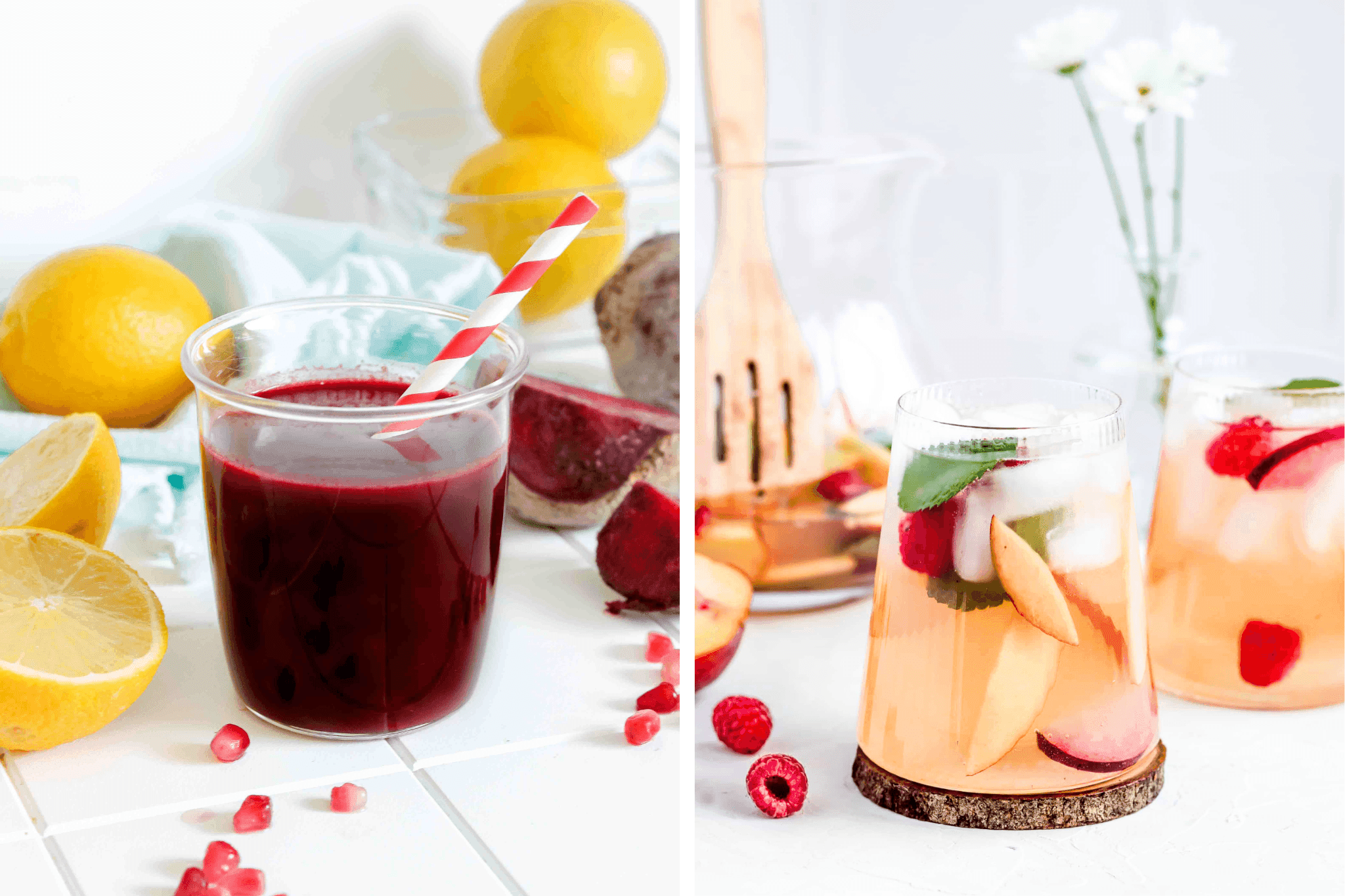
Fruit juice can be included in a low-histamine diet, especially if it is freshly made. Suitable choices are apple, pear, mango, pomegranate and blueberry juice and coconut water is also an excellent option.
With regard to fruit juices, just as in the case of all parts of a low-histamine diet, freshness is important since ripening, processing and storage can affect the levels of histamine and other biogenic amines in food; it is therefore better to use freshly pressed or blended juice when this is possible. Another option is to dilute the juice with still or sparkling water in order to make it lighter.
If you're after a creamy texture, then oat, rice or coconut milk is worth trying. Where possible, select types that have short ingredient lists- should you be particularly sensitive, unsweetened ones that don't contain any added gums, thickeners, preservatives or flavourings might be easier for you to tolerate. Plant milk can be consumed cold, warmed up by itself, or used as a base for caffeine-free lattes and other hot drinks.
When you are looking for something that has a stronger flavour, you can choose from turmeric and ginger. You might try turmeric tea, ginger tea, a mixture of turmeric and ginger tea, a turmeric latte, an iced turmeric latte, or warm plant milk infused with ginger. Turmeric is considered a relatively low-histamine option, and small quantities of ginger are usually well tolerated. Since individual tolerance to spices can differ, it is easier to work out what suits you if the recipes are kept simple.
When you begin mixing the drinks listed above, the number of options increases significantly. You could have a spritzer made with apples, pears, blueberries, a fizz with cucumber and mint, or sparkling water mixed with apple or pear juice. Herbal teas can also be used as the base for mocktails: cool peppermint or rooibos tea, served over ice, with a splash of apple or pear juice, or as an iced rooibos latte with coconut milk. Making your own drinks gives you far more control over the ingredients than using bottled cocktail or mocktail mixes.
Alcohol is a more complicated matter, since some alcoholic drinks contain much less histamine than do others. Among the better choices are plain vodka, gin, blanco or silver tequila, and un-aged white rum. Wine which has been specially produced or laboratory-tested to have very little histamine can also be considered an option.
A important exception should be noted: even if the alcoholic drink contains little histamine, ethanol can prevent the breakdown of histamine and thus individual tolerance may still be low. Moreover, beer, cider, ordinary wine, aged spirits, and liqueurs are generally not suitable choices.
It is not necessary for a low histamine diet to involve drinking nothing but plain water throughout the day since water, infused water, herbal teas, fresh fruit juices, simple plant milks, turmeric and ginger drinks, spritzers, mocktails, and certain alcoholic drinks can all offer variety and at the same time keep you on your diet.
Individual tolerance is still important; in order to find out which foods and drinks you can tolerate, a low histamine diet is followed by a gradual reintroduction rather than by permanently avoiding all those that might contain histamine.
Share this article