Popular Conditions & Diets

I grew up around food allergies.
In school, there were peanut-free tables, and then a full school board shift to peanut-free everything in accordance with Sabrina’s Law. Birthday parties came with ingredient lists.
By the time I started my first career working in childcare, I was well-trained on how to recognize and respond to anaphylaxis. And thankfully I was, because it happened. It wasn’t rare. It felt like every room had at least one child at risk.
So when I had my daughter, I assumed I’d be navigating the same reality.
Instead, I found myself reading something completely different. The guidance had changed. Not slightly, but completely.
For years, parents were told to delay introducing peanuts and other common allergens. The idea was that avoiding exposure would reduce the chance of a reaction.
That advice has since been reversed, largely because of the 2015 LEAP Study.
The study found that introducing peanut-containing foods early in infancy reduced the risk of developing a peanut allergy by up to 81% in high-risk children. It was a turning point.
Organizations like the Canadian Paediatric Society and the American Academy of Pediatrics now recommend introducing common allergens around six months of age (but not before four months), once a baby is ready for solids.
When I read that, I paused. It felt counterintuitive after everything I had grown up seeing. And then I went for it.


The early data suggests that this shift may be making a difference.
A moe recent U.S. study published in Pediatrics found that peanut allergy rates in young children dropped from roughly 0.8% to 0.45% after early introduction guidelines became more widely adopted. Rates of overall food allergies declined as well.
In Canada, similar patterns are starting to appear. Researchers at the Montreal Children’s Hospital observed a decrease in first-time peanut-related anaphylaxis in children aged 0 to 2; the group most directly impacted by these newer feeding practices.
We’re not seeing allergies disappear. But we may be seeing the beginning of a generation with reduced allergies.
What surprised me most wasn’t just the change in guidance, it was the reasoning behind it.
The immune system doesn’t automatically know what’s safe. It learns through exposure. This process is known as Oral tolerance.
When allergenic foods are introduced early and offered regularly, the body is more likely to recognize them as harmless. When exposure is delayed, the immune system may be more likely to treat them as a threat.
It’s not about trying a food once. It’s about consistent exposure over time.
Peanuts are where the evidence is strongest, but they’re not the only food being studied.
There’s growing research suggesting that early introduction may also help reduce the risk of allergies to foods like eggs, though the data isn’t as definitive. Other allergens, like tree nuts, sesame, and wheat, are still common, and in some cases not showing the same clear decline.
Organizations like Food Allergy Canada continue to emphasize that food allergies are broader than peanuts, and that risk varies from child to child.

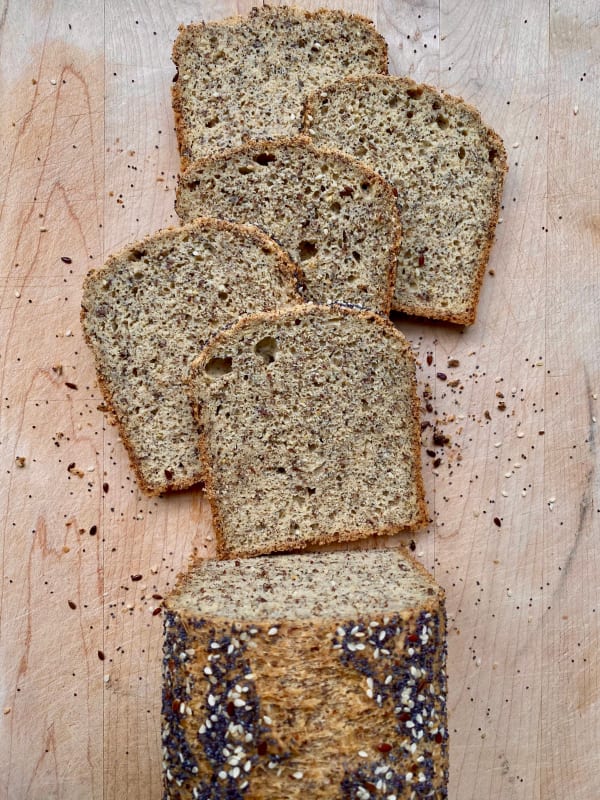
By the time I started introducing solids, the guidance felt clear, but still a bit intimidating.
Current recommendations from Health Canada and the Canadian Paediatric Society suggest:
For higher-risk infants, those with severe eczema or existing allergies, parents are definitely advised to speak with a healthcare provider first.
For me, it wasn’t about doing everything perfectly. It was about understanding that the approach had changed, and that avoiding these foods wasn’t necessarily the safest path anymore.
Allergy trends don’t change overnight.
It takes time for new guidance to reach families, and even longer to show up in population-level data. Diagnosis rates, awareness, and environmental factors all play a role.
What’s notable here is that this is one of the first times we’re seeing a clear connection between updated feeding guidance and a potential decline in allergy rates.
I still carry everything I learned from those early experiences, how serious food allergies are, how quickly they can escalate, how important it is to be prepared.
But I also carry something new: The understanding that early, consistent exposure may actually reduce risk. It’s not a guarantee. It won’t prevent every allergy. But for something that once felt inevitable, it offers a different kind of possibility.
And for parents like me, that shift matters.
Every child is different. Speak with your healthcare provider to determine the safest approach for introducing allergens based on your child’s needs.
Children’s Hospital of Philadelphia researchers observe significant reduction in diagnosis of food allergies following expert guidelines encouraging early peanut exposure | Children’s Hospital of Philadelphia. (n.d.). https://www.chop.edu/news/childrens-hospital-philadelphia-researchers-observe-significant-reduction-diagnosis-food
Early introduction: Eat early. eat often. . Food Allergy Canada. (n.d.-a). https://foodallergycanada.ca/living-with-allergies/ongoing-allergy-management/parents-and-caregivers/early-introduction/
Goodwin, J. (2025, October 22). Early peanut introduction linked to drop in child food allergies. allergic living. https://www.allergicliving.com/2025/10/22/early-peanut-introduction-linked-to-drop-in-child-food-allergies/
Introduce complementary foods earlier to prevent allergy: Paediatricians. Canadian Paediatric Society. (n.d.-a). https://cps.ca/en/media/introduce-complementary-foods-earlier-to-prevent-allergy-paediatricians
Introducing peanuts earlier to reduce allergies. McGill University Health Centre. (n.d.). https://muhc.ca/news-and-patient-stories/releases/introducing-peanuts-earlier-reduce-allergies
Learning early about peanut allergy (LEAP). FoodAllergy.org. (n.d.). https://www.foodallergy.org/resources/learning-early-about-peanut-allergy-leap#:~:text=The%20LEAP%20study:%20*%20Followed%20children%20who,introduction%20to%20peanut%20foods%20could%20be%20long%2Dlasting
More than peanuts social media campaign . Food Allergy Canada. (n.d.-b). https://foodallergycanada.ca/campaign/back-to-school-2024/more-than-peanuts-campaign/
Peanut allergies have plummeted in children, study shows. The New York Times. (n.d.). https://www.nytimes.com/2025/10/20/well/peanut-allergy-drop.html
Timing of introduction of allergenic solids for infants at high risk. Canadian Paediatric Society. (n.d.-b). https://cps.ca/en/documents/position/allergenic-solids
U.S. Department of Health and Human Services. (2025, April 1). Introducing peanut in infancy prevents peanut allergy into adolescence. National Institutes of Health. https://www.nih.gov/news-events/news-releases/introducing-peanut-infancy-prevents-peanut-allergy-into-adolescence
Zafar, A. (2026, March 14). Peanut allergy prevention grounded in science. CBC News. https://www.cbc.ca/news/health/so-peanut-allergy-leap-9.7125919
Share this article