Popular Conditions & Diets

If you have irritable bowel syndrome (IBS), fibre can feel complicated. You may have been told to eat more fibre for digestive health, only to find that fibre-rich foods like beans, wheat, onions, or certain fruits can leave you feeling bloated and uncomfortable.
If you’ve started specifically pursuing a low-FODMAP diet to reduce IBS symptoms, you’ve probably also noticed that high fibre foods are often, unfortunately, also high-FODMAP. The good news is that low-FODMAP doesn’t have to mean low-fibre. The key is choosing the right types of fibre, in the right portion sizes, and increasing them gradually.
FODMAPs are fermentable carbohydrates that can draw water into the intestine and produce gas when fermented by gut bacteria. For people with IBS, these effects can contribute to bloating, abdominal pain, diarrhea, and other symptoms.
There is also some overlap between FODMAPs and fibre. Fructans and galacto-oligosaccharides (GOS), for example, are dietary fibres, while other FODMAPs such as lactose and fructose are sugars. This means reducing foods rich in fructans, and GOS can unintentionally reduce your fibre intake too.
That matters because fibre supports regular bowel movements, stool consistency, and the gut microbiome. Low-FODMAP diets can be particularly challenging because several common fibre sources- including some whole grains and legumes- are temporarily restricted or limited.
Fibre is traditionally divided into soluble and insoluble types. Soluble fibre absorbs water and can form a gel, helping soften or normalize stool. Insoluble fibre adds bulk and can speed intestinal transit.
But more recent research suggests that this distinction does not tell the whole story. Characteristics such as water-holding capacity, bulking ability, viscosity, and the rate at which a fibre is fermented may better predict its effects on someone with IBS. Slowly or minimally fermented fibres may produce less gas formation than highly fermentable fibres.
Overall, soluble fibre has the strongest evidence. A systematic review of 14 randomized trials involving 906 people with IBS found that soluble fibre improved symptoms, whereas wheat bran (an insoluble fibre) did not provide a significant benefit.
And importantly, adding fibre doesn’t necessarily interfere with a low-FODMAP diet. In one controlled trial, people with IBS followed low-FODMAP diets containing different amounts and types of fibre. Supplementing with specific fibres maintained the diet’s symptom benefits while increasing stool output by roughly 50%.
Monash University identifies a wide range of fibre-containing foods that can fit within a low-FODMAP diet. Good options include:
Whole grains and starches:
Nuts and seeds:
Fruit:
Veggies:
Legumes and plant proteins:
Note the portion sizes above. Some foods that are low-FODMAP in smaller servings can become higher in FODMAPs as the portion increases.

Psyllium is one of the best-studied fibre supplements for IBS. In a randomized trial of 275 people, psyllium produced greater symptom relief than placebo during the first two months. Participants assigned to bran were also more likely to stop treatment early because their IBS symptoms worsened.
Partially hydrolyzed guar gum (PHGG) is another potentially useful option, although the evidence is less established. By contrast, highly fermentable fibres such as inulin, fructooligosaccharides (FOS), and GOS may increase gas-related symptoms in some people with IBS and are probably best avoided.
That makes ingredient labels worth checking: a product marketed as “high fibre” isn’t automatically IBS-friendly.
More isn’t always better, especially overnight. Increasing fibre too quickly can cause gas, bloating, cramping, or changes in bowel habits, even in people without IBS.
The trick is to increase fibre gradually, try one new source at a time, spreading it throughout the day, and making sure to drink enough fluids. If symptoms flare, reducing the amount and increasing it more slowly may help.
Finally, remember that the strict restrictive low-FODMAP phase is intended to be temporary. After symptoms settle, foods are systematically reintroduced, and the diet is personalized according to individual tolerance rather than remaining maximally restrictive indefinitely.
When it comes to fibre and IBS, the question isn’t simply whether to eat more or less. The type, amount, fermentability, and pace of introduction can make all the difference.
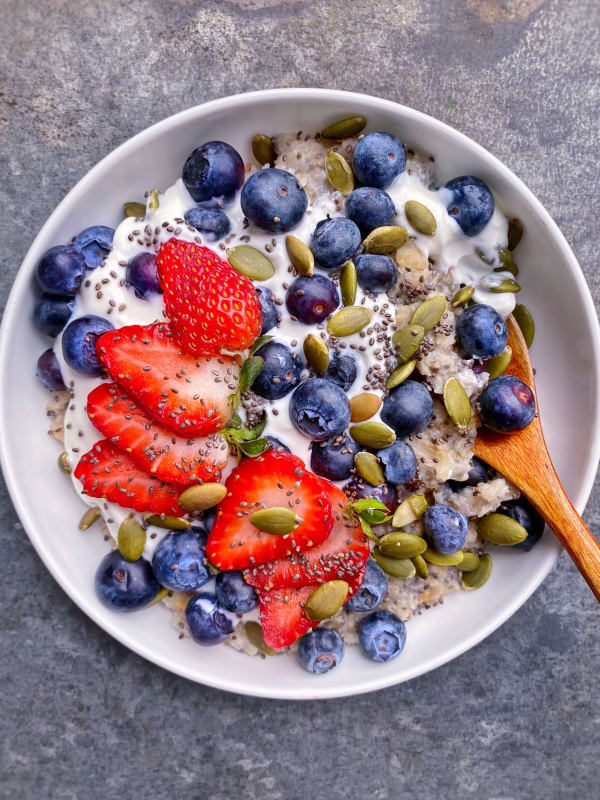
Low-FODMAP fibre sources such as oats, chia, flax, kiwi, quinoa, and appropriately portioned legumes can help maintain fibre intake, while psyllium has particularly strong evidence supporting its use as a supplement. The goal is not to avoid fibre, it’s to find the fibres your gut tolerates best.
Share this article